




Autism News
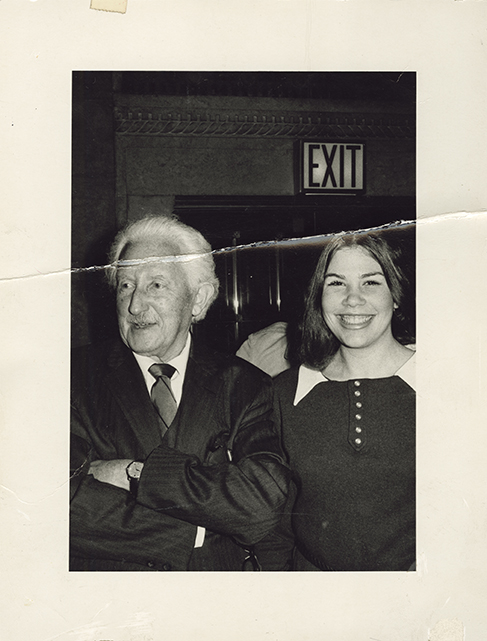
Dr. Daryl Hannah gets diagnosed with Asperger’s with the use of a “projective assessment”
* Please see several articles on projective assessments useful in ASD.
New Videos Announced!
ITALY- Jobs for Autism! Specialized job opportunities for autistic individuals in Italy are growing, with a focus on IT, data analysis, and neurodiversity-friendly workplaces. Specialisterne Italy is a key resource, providing training and employment opportunities in technology and administrative roles. Other avenues include Auticon, which hires autistic consultants for IT roles, and local initiatives like SILD (Disability Job Placement Service) in Lazio.
Cognitive Assessments Using the CATA- Validity Evidence Dr Anna Villemore-Amaral 2013 Corpus ID 201635361
Projective tests have also been utilized in assessing children and adolescents in custody matters. In the Ackerman study (Ackerman and Ackerman, 1997), only 8% of respondents reported that they did not test children. The Children’s Apperception Test (CAT) was the most widely used instrument, with 37% of respondents reporting use of the test in custody cases, and those respondents reporting that the CAT was used 53% of the time.
The CAT Appreception test and other projective assessments can provide valuable insights into the psychological profiles of individuals with autism. These tools help clinicians understand cognitive and emotional functioning, revealing unique patterns in responses that may reflect autistic thinking and behavior.
Insights from Rorschach and Projective Assessments
The Rorschach test and other projective assessments can provide valuable insights into the psychological profiles of individuals with autism. These tools help clinicians understand cognitive and emotional functioning, revealing unique patterns in responses that may reflect autistic thinking and behavior.
Insights from Rorschach and Projective Assessments
Projective assessments are particularly relevant in understanding autism.
Rorschach Test — This projective technique is used to explore personality and emotional functioning, often revealing distinct patterns in individuals with autism.
Autistic Responses — Studies show that responses to the Rorschach can highlight specific cognitive styles associated with autism, such as literal thinking.
Diagnostic Utility — Projective assessments can aid in diagnosing autism spectrum disorders by identifying unique psychopathological elements.
Therapeutic Insights — These assessments can also inform therapeutic approaches by uncovering underlying emotional issues.
The role of projectives in Asperger’s syndrome and autism spectrum disorder:
Projective assessments, like the Rorschach test, are sometimes used in the assessment and understanding of individuals with autism spectrum disorder (ASD), including those previously diagnosed with Asperger’s syndrome.
Here’s how they can play a role:
- Complementary Data: Projective tests can offer a different lens into the holistic dimensions of an individual with ASD, potentially revealing qualitative aspects that might be missed by more structured assessments.
- Exploring Cognitive and Affective Functioning: They may provide insights into the unique cognitive and emotional experiences of autistic individuals, including thinking processes and emotional reactions which may not always be readily apparent through observation or direct questioning.
- Identifying Indicators: Research suggests that projective assessments can highlight indicators related to autistic semiological characteristics, as well as the singular cognitive and affective psychological functioning of the individual.
- Potential for Differential Diagnosis: These tests may offer elements, both quantitative and qualitative, that assist clinicians in distinguishing ASD from other psychiatric disorders, especially in complex cases where standard diagnostic protocols may be limited.
Projective Testing: https://link.springer.com/rwe/10.1007/978-1-4614-6435-8_2012-3
Jan 29, 2018 · Projective tests, also commonly called projective techniques, encompass a class of psychological measures characterized by two key features. First, they present a relatively unstructured or ambiguous stimulus (e.g., an inkblot) to which a person responds. Second, they allow for great latitude in the person’s response.
Understanding Projective Tests: A Game-Changer in Talent Assessment
Projective tests have emerged as a transformative tool in talent assessment, allowing for deeper insights beyond the quantitative measurements of traditional psychometric tests. Unlike standard tests that often constrain individuals to fixed responses, projective tests, such as the Rorschach Inkblot Test and the Thematic Apperception Test (TAT), invite subjects to reveal inner feelings and thoughts through ambiguous stimuli. A 2018 study published in the “Journal of Personality Assessment” found that projective tests can enhance the understanding of personality by uncovering unconscious motivations and emotions, which standard tests may overlook. Researchers noted a staggering 60% improvement in predictive validity for personality assessments when utilizing projective techniques alongside conventional methods.
Furthermore, the versatility of projective tests in diverse contexts amplifies their significance in modern assessments. For instance, a recent meta-analysis revealed that organizations employing projective assessments reported a 35% reduction in employee turnover compared to those relying solely on traditional tests (Harris, K. & Smith, L., 2022, “Projective Techniques: A Quantitative Review of Effectiveness”). Such data underscores how these tests not only provide qualitative insights into an individual’s psyche but also serve a practical function in enhancing workforce stability. By integrating projective methods, employers can better align their talent acquisition strategies with the inherent qualities of prospective hires, ensuring not just a skills match, but a cultural fit that traditional measurements often fail to capture.
The relevance of projective assessments on autistic children: https://www.researchgate.net/
FDA Takes Action to Make a Treatment Available for Autism Symptoms
“We have witnessed a tragic four-fold increase in autism over two decades,” said FDA Commissioner Marty Makary, M.D., M.P.H. “Children are suffering and deserve access to potential treatments that have shown promise. We are using gold standard science and common sense to deliver for the American people.”
The FDA is working with GSK, the innovator of Wellcovorin (leucovorin calcium), on a process to include the essential scientific information needed for the safe and effective use of these drug products for adults and pediatric patients with CFD. As the New Drug Application (NDA) holder for this medicine, GSK has preliminarily agreed to work with the FDA on this relabeling effort.
“The FDA is collaborating with GSK to broaden the existing Wellcovorin label,” said George Tidmarsh, M.D., Ph.D., Director of the FDA’s Center for Drug Evaluation and Research. “This effort reflects the FDA’s commitment to identify opportunities to repurpose drugs to treat chronic diseases. The FDA remains committed to finding and treating the root causes of autism.”
Autism Success Story
Art and Autism!
For many with Autism and with down syndrome, the talents are in the arts both visual and performing arts!
For the visual arts-
- Art improves find motor skills
- Improves ability to imagine
- Improves self-esteem
- Increase manageability of recognizing facial expressions
- Encourages imagination and discipline
ClearStandASD
ClearStrand-ASD is the first and only objective laboratory test that can help health care providers rule out autism in children under 4 years (48 months) of age, using a strand of hair.
The relevance of projective assessments on autistic children
Spectrum Designs provides opportunity for workers on the autism spectrum
Leo The Lion and the Kangaroo is a perfect source for defining what job opportunities suit those with special needs.
Autism Outloud - Italy
Prevalence of Autism
Disseminating information about the prevalence of autism, as well as on diagnostic and intervention services, education, financial support, housing, and employment for autistic persons could significantly influence governmental policy planning of the services offered for autistic children and adults. No that many have described the service needs and the existing services for autistic persons across the lifespan in papers.. Most reports focus on the services provided to the autistic population in Western developed countries, where resources are readily available.1–5 However, there is limited published information regarding the availability of services and needs in developing countries, where the field of child psychiatry, including autism, is relatively new. Reports indicate that services for individuals with autism and their families are limited worldwide,1–5 especially in developing countries.6–8 Autism was not a subject of interest in the Arab countries until the late 1990s. A lack of awareness, cultural factors, and insufficient resources contribute to the unmet needs of autism patients in the Middle East.6 For example, most children with ASD in Jordan have limited access to recommended autism services.7 Even in Oman, an Arab country that has achieved economic prosperity and provides a national health system free of charge to all citizens from birth to death, people with ASD do not receive appropriate services due to severe shortage and maldistribution of facilities.8 Tremendous effort is needed to raise policymakers’ awareness of the necessity of implementation services and research plans to bridge the gap between needs and services worldwide. This should be done in the UN meetings. This effort should be informed by data from both developed and developing countries worldwide, encompassing diverse cultures.
Updates- 2026 The UN has been devoted to Autism and it also has a bookstore. The two countries that do the most for ASD are Italy, Israel and now Brazil (is starting)
The good news is—-Spectrum Horizon is an organization that started in New Jersey and has now now opened up across the country. They are a printing company and only hire those on the Spectrum.
Italy and Israel offer jobs only to people on the Spectrum and have environments sensitive to sensory issues.
Switzerland is doing stem cell research. Dr. Richard Fry discovered a few years ago that Loucovin by passes the block in the brain that folic acid is needed so that some can begin talking. This drug was used many decades ago to relieve patients from chemo.